


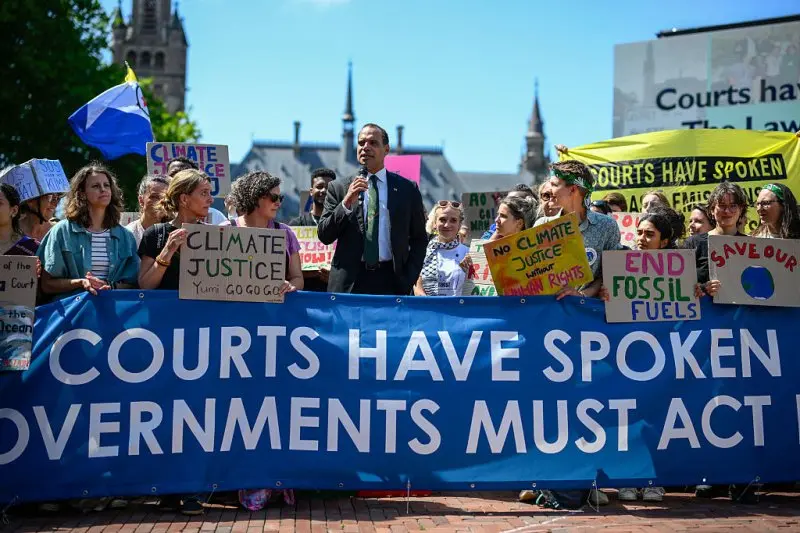
Today, the International Court of Justice issued a powerful advisory opinion declaring that countries face binding legal obligations to combat climate change and protect both present and future generations from environmental harm.
In a unanimous decision, the Court described climate change as an “urgent and existential threat,” emphasizing that states must cooperate to reduce greenhouse gas emissions aggressively and in line with the Paris Agreement’s 1.5°C limit. Underscoring the ruling’s human impact, the court affirmed that a clean, healthy, and sustainable environment is a fundamental human right under international law.
Judge Yuji Iwasawa stressed that national climate plans must be “of the highest ambition” and highlighted that emissions from any territory, regardless of where they occur, can cause cross-border harm, which violates international duties rooted in due diligence. The ruling also reaffirms that states must not only mitigate their own emissions but also regulate private actors contributing to the climate crisis.
Although advisory and non-binding, the opinion carries considerable moral and political weight. Legal experts say it will permanently reshape future climate litigation, giving small island and low-lying nations a robust legal basis to demand reparations or stronger action from major emitters. Activists and environmental groups are calling today’s ruling a “turning point” for global climate accountability.
The decision outlines core obligations under international law: mitigation, adaptation, cooperation, equitable treatment, and the provision of reparation when countries fail in their duties. Wealthy nations, in particular, are urged to help vulnerable states adapt and respond to climate impacts, marking a shift from voluntary pledges to legal expectations.
Today’s release follows a wave of climate rulings worldwide, including from the International Tribunal for the Law of the Sea and the Inter-American Court of Human Rights, and is expected to intensify pressure on governments to deliver real climate action ahead of COP30 in Brazil.
Read the full advisory opinion from the International Court of Justice here (PDF).