


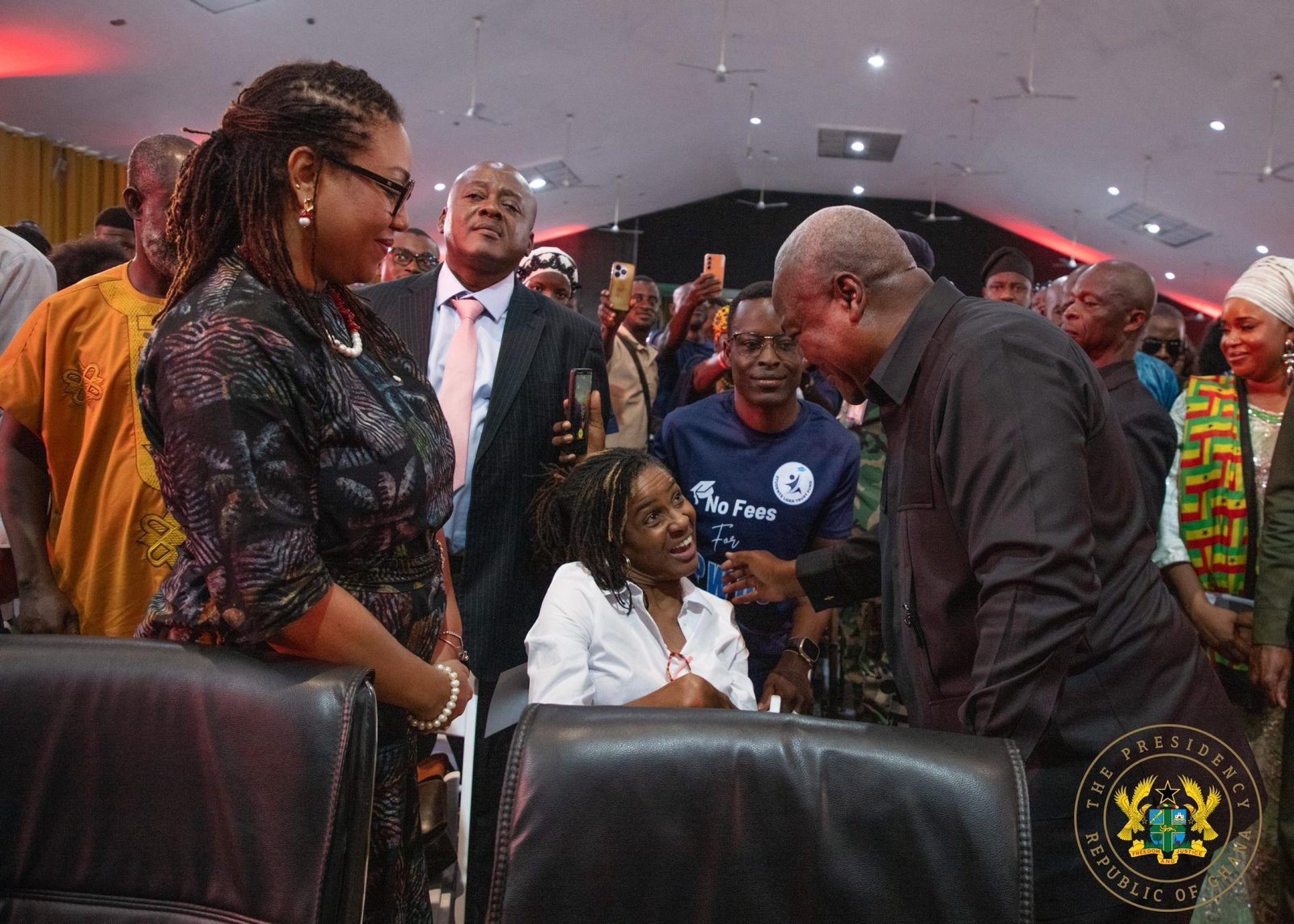
President John Dramani Mahama has officially launched a free tertiary education policy for Persons With Disabilities (PWDs) as part of the government’s No Fee Stress initiative aimed at improving access to higher education for all.
The policy was unveiled at the Accra Teachers’ Training College on October 24, where President Mahama announced new interventions to promote inclusivity and empower PWDs across the country.
Speaking at the launch, the President revealed that the government is collaborating with key stakeholders to enforce a 5% employment quota for PWDs in both the public and private sectors. He also announced an increase in the District Assemblies Common Fund (DACF) allocation to PWDs from 3% to 5%, beginning next year.
“Next year, in the District Assembly’s Common Fund formula, we intend to increase the allocation to persons with disabilities from three percent to five percent,” President Mahama said.
He added that private sector organisations that meet the employment quota will benefit from tax incentives, while public sector ministries will be required to report annually on their compliance with the quota.
Chief Executive Officer of the Students Loan Trust Fund (SLTF), Dr. Saajida Shiraz, explained that the initiative is designed to eliminate financial barriers that often hinder students with disabilities from accessing tertiary education.
“Since the launch of the No Fee Stress initiative, the Fund has disbursed monies to cover the full school fees of students with disabilities across public tertiary institutions,” she noted.
“Public tertiary institutions will now directly provide a validated list of students with disabilities to the SLTF through the tertiary institutions portal, after which their full fees will be paid. Students no longer need to apply individually.”
Meanwhile, the President of the Ghana Federation of Disability Organisations (GFD), Joseph Atsu Homadzi, commended the government for fulfilling a key manifesto promise.
“This initiative brings great financial relief and ensures that our people have access to quality education. It’s comprehensive, covering tuition, accommodation, and university fees,” he said on Channel One TV.
The new policy forms part of the government’s broader commitment to building an inclusive educational system where no Ghanaian is left behind due to disability or financial limitations.